Critical concept in food exports to the US: What is SAHCODHA? Everything you need to know about FSMA rules and legal requirements
What is SAHCODHA? What does the acronym stand for?
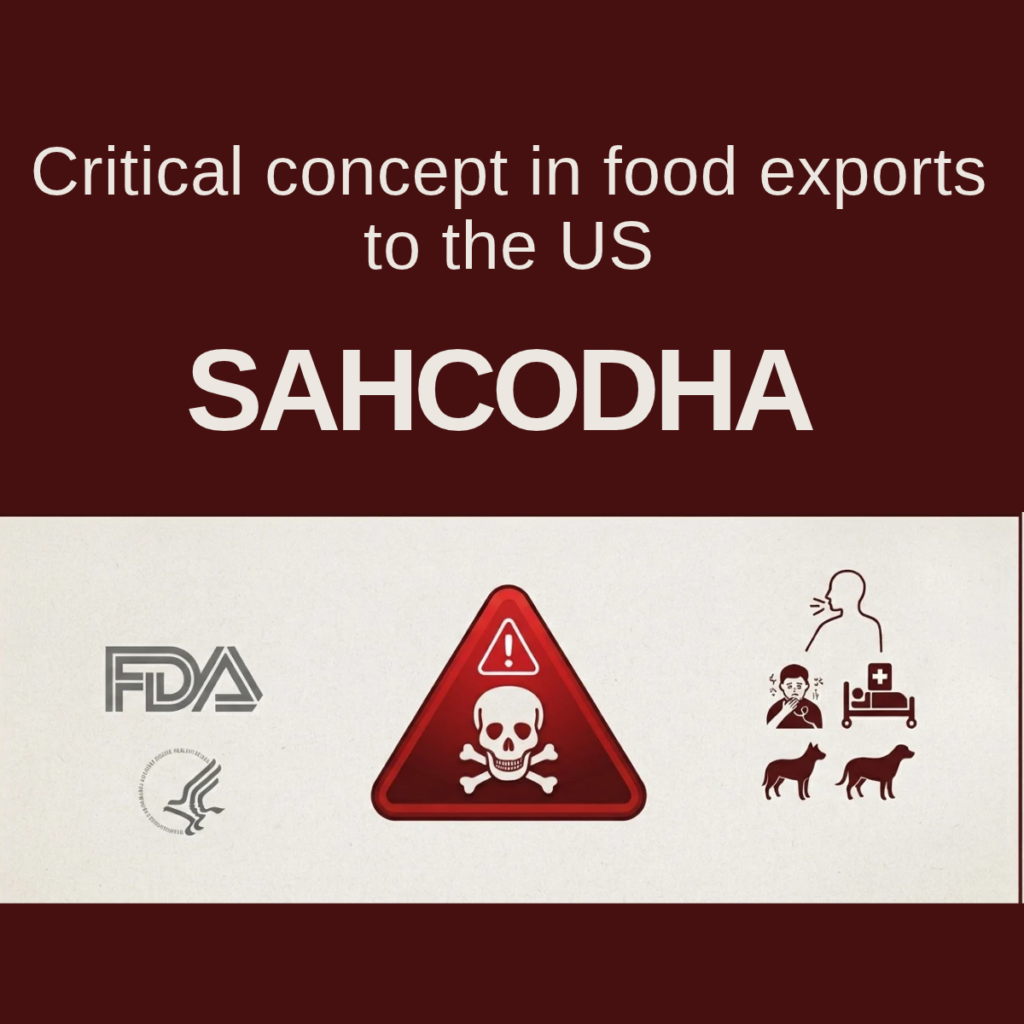
SAHCODHA is an acronym formed from the initials of the phrase “Serious Adverse Health Consequences or Death to Humans or Animals”.
The FDA uses this term to describe the highest level of risk a food- or feed-borne hazard can pose to consumer health if it is not kept under control.
Which hazards fall under SAHCODHA?
For a hazard to be classified as SAHCODHA, exposure to it must carry a risk of serious illness, permanent damage, or death. The main examples are:
- Biological Hazards: Potentially lethal pathogens such as Salmonella, Listeria monocytogenes, coli O157:H7, or Clostridium botulinum.
- Chemical Hazards: Undeclared major food allergens (peanuts, milk, eggs, shellfish, etc.) or highly toxic chemicals.
- Physical Hazards: Pieces of glass, metal, or hard plastic large enough to cut, puncture, or pose a choking hazard.
Why is the SAHCODHA concept so important?
Because this classification directly determines the frequency and stringency of the verification activities that a food business or U.S. importer must carry out. If a hazard is at the SAHCODHA level, standard procedures are not considered sufficient, and the highest level of control mechanisms is legally triggered.
What are the legal requirements related to SAHCODHA?
FDA’s regulations under FSMA (particularly the 21 CFR Part 117 Preventive Controls and 21 CFR Part 1 Subpart L FSVP rules) impose very clear legal obligations for SAHCODHA hazards:
- Mandatory Annual On-Site Audit: If a raw material or product has a SAHCODHA-level hazard and that hazard is controlled by the supplier, the receiving facility (or the U.S. importer) must audit its supplier on-site at least once a year.
- Qualified Auditor Requirement: These annual on-site audits cannot be an ordinary visit; they must be carried out by independent persons who are knowledgeable about FDA regulations and hold the “Qualified Auditor”
- Alternative Verification Exception: If the importer or manufacturer wants to apply another verification method instead of an annual on-site audit (for example, very frequent accredited laboratory analyses), they must scientifically demonstrate that this alternative controls the SAHCODHA hazard to the same degree and justify it in writing.
- Record Keeping and Traceability: All risk assessments, audit reports, corrective actions, and analysis results must be fully documented and retained so they can be presented during a possible FDA inspection.
How does it affect companies exporting from Türkiye to the US?
If you export products such as hazelnuts, dried fruit, spices, dairy products, canned goods, or bakery products to the US, there is a high likelihood of SAHCODHA hazards such as aflatoxin, Salmonella, or undeclared allergens in your product.
In this case, your customer in the US (the FSVP importer) will require regular audits every year from you in order to fulfill their legal responsibility. Having a PCQI (Preventive Controls Qualified Individual) at the facility and a Food Safety Plan that clearly manages these hazards is critical for continued exports.
How does the product recall process work if there is a SAHCODHA hazard?
Detection of a SAHCODHA-level hazard in a product already on the market means a Class I Recall in FDA classification. This is the most urgent recall level; it requires the company to immediately withdraw the products from the market, notify its customers and the FDA, and issue a public announcement.